

Landscape Lighting Types: How Installers Choose the Right Fixtures for Each Area


Landscape lighting problems usually come from misapplied landscape lighting types, not from product quality. Glare, uneven coverage, dark walkways, and frequent adjustments are common results of placing the wrong lighting type in the wrong area.
Professional installers select landscape lighting types based on area function, movement patterns, and long-term performance, not appearance alone. Each part of a property—walkways, entrances, structures, open areas, and elevation changes—requires a specific lighting approach to function correctly at night.
This guide explains how installers choose landscape lighting types for each area of a property to improve visibility, reduce callbacks, and create systems that perform consistently over time.
Path Lights for Walkways and Pedestrian Routes
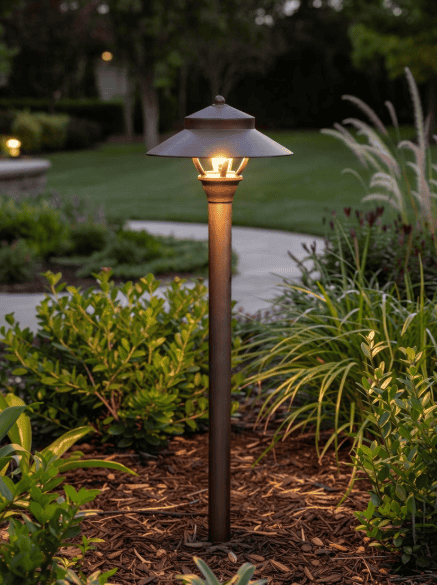
Path lights provide low-level, directional illumination used to guide movement along walkways, driveways, and pedestrian paths without creating glare.
Installers use path lights where visibility and edge definition matter more than brightness. Consistent spacing controls shadows and prevents dark gaps that lead to callbacks.
Spotlights for Architectural and Vertical Features
Spotlights deliver focused beams used to highlight vertical surfaces such as facades, columns, signage, and structural elements.
Installers select spotlights when precise direction and beam control are required. Proper aiming prevents harsh shadows and light spill.
Flood Lights for Open Areas and Broad Landscape Coverage
Flood lights provide wide beam distribution used to illuminate larger open areas and property perimeters.
These lighting types are chosen when even coverage matters more than focal emphasis, especially in commercial landscapes where visibility and orientation are priorities. While flood lights and spotlights are often grouped together, installers distinguish them by beam spread and application. In some cases, wide-beam spotlights are used to achieve flood-style coverage depending on mounting height and layout—the difference between flood lights and spotlights.
Uplights and In-Ground Landscape Lights for Trees and Landscape Features
Uplights and in-ground lights direct light upward to emphasize trees, planting beds, and landscape elements.
Installers use these lighting types to add depth and vertical dimension. Placement and durability matter because these fixtures are exposed to soil, moisture, and debris.
Step and Hardscape Lights for Elevation Changes
Step lights and hardscape lights illuminate changes in elevation such as stairs, retaining walls, and raised walkways.
These lighting types improve safety by outlining edges and transitions. Installers choose integrated fixtures in these areas to keep lighting subtle and functional rather than decorative.
Wall Lights for Entrances and Building Access Areas
Wall-mounted lights provide consistent illumination near doors, building access points, and exterior walls.
These lighting types improve visibility at entrances while maintaining alignment with nearby path and step lighting systems.
Deck Lights for Outdoor Platforms and Elevation Transitions
Deck lights deliver low-output illumination integrated into decks, patios, and raised outdoor surfaces.
Installers use deck lights to maintain safe movement across elevated platforms without overpowering surrounding lighting zones.
Deck Lighting Fixture Examples:

Why Installers Combine Multiple Landscape Lighting Types
Professional landscape lighting systems rely on multiple lighting types working together. No single fixture type addresses all functional needs across a property.
Layering path lights, spotlights, uplights, and step lights creates systems that balance visibility, depth, and long-term performance.
Pro Tip for Installers: Solve Lighting Problems on Paper Before You Dig
Before selecting fixture types, map movement paths, sightlines, and elevation changes on a simple site plan. Most glare complaints and uneven coverage issues stem from fixture types being chosen before circulation and viewing angles are considered.
Installers who assign lighting types based on how people move through a property—rather than how features look during the day—reduce re-aiming, callbacks, and fixture relocation after installation.
How Installers Finalize Lighting Type Selection Across a Project
Selecting landscape lighting types does not stop at identifying where each fixture is used. Installers also consider how lighting types perform together as a system over time.
Using consistent fixture families across path lights, spotlights, uplights, and step lights improves service efficiency. Material quality, weather resistance, and long-term availability affect how easily systems can be maintained or expanded.
Installers sourcing wholesale landscape lighting often choose product lines that support multiple lighting types within the same system.
