

Start a Permanent Outdoor Christmas Lighting Business

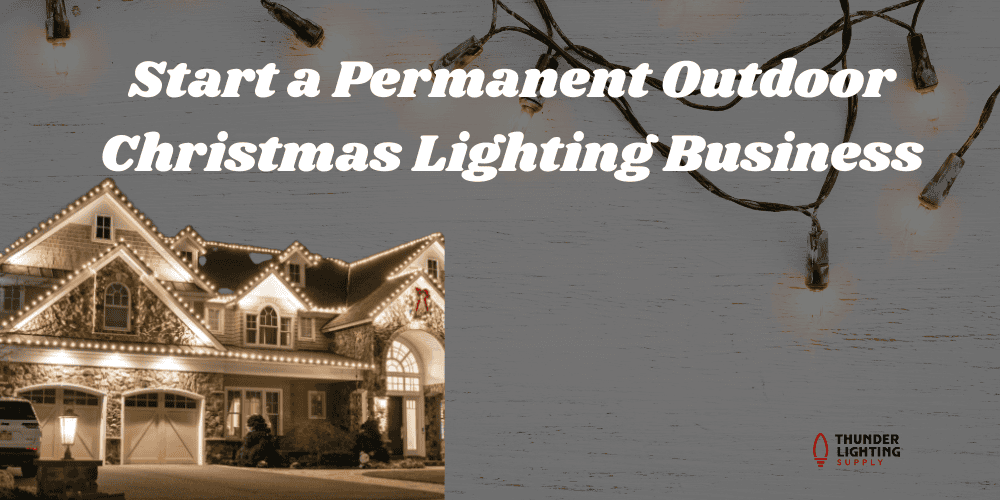
Demand for permanent outdoor Christmas lighting has grown rapidly across the United States over the past several years. Homeowners are increasingly investing in year-round, app-controlled lighting systems that work for holidays, game days, and everyday architectural accent lighting—without the need to climb ladders every season.
For lighting installers, electricians, and landscape lighting contractors, this represents a high-margin service expansion with strong seasonal momentum and scalable revenue potential.
This guide walks you through exactly how to start and grow a profitable permanent outdoor Christmas lighting business in the U.S.
What Is Permanent Outdoor Christmas Lighting?
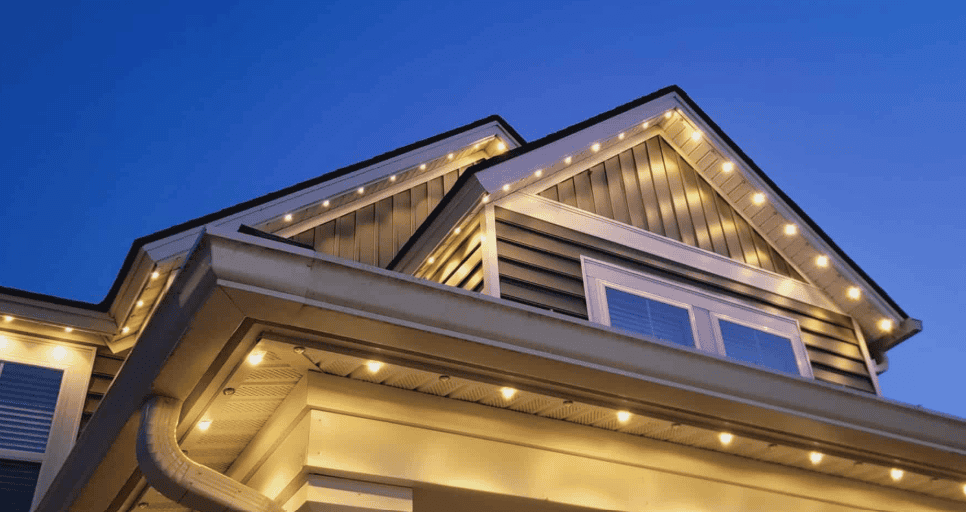
Permanent holiday lighting systems are low-voltage LED installations mounted along rooflines, fascia, soffits, and architectural trim. The lights are housed inside discreet aluminum tracks, making them nearly invisible during the day.
Controlled through smartphone apps, homeowners can change colors, patterns, and schedules instantly. While Christmas drives most purchases, these systems are also used for Halloween, Fourth of July, sporting events, parties, and everyday accent lighting.
Why This Is a Smart Expansion for Installers
If you already install landscape lighting, exterior electrical systems, or seasonal Christmas lights, this service fits naturally into your business.
The skill set is similar. The difference is the ticket size.
Most residential projects range between $3,000 and $15,000. In many U.S. markets, pricing falls between $20 and $30 per linear foot. A 200-foot installation at $25 per foot produces a $5,000 project that can often be completed in one day with a two-person crew.
With proper pricing and efficiency, gross margins between 40% and 60% are achievable.
Setting Up the Business Correctly
Start by forming an LLC for liability protection. As revenue grows, transitioning to an S-Corp can provide tax advantages.
You’ll need to register your business in your state, obtain an EIN from the IRS, and verify whether your state requires a low-voltage or electrical contractor license.
Insurance is essential. At minimum, carry general liability coverage. If you hire employees, workers’ compensation and commercial auto insurance are typically required.
Professional structure builds homeowner confidence.
Choosing the Right Equipment and Supplier
Your supplier directly impacts your long-term profitability and installation consistency.
Permanent outdoor lighting systems must withstand extreme heat, freezing winters, moisture, and continuous outdoor exposure. The quality of the components you install determines how confidently you can stand behind your work.
At Thunder Lighting Supply, we specialize in commercial-grade permanent lighting systems built specifically for professional installers across the United States. We carry trusted brands — including OMNI — and focus on products designed for durability, clean installations, and scalable performance.
Beyond product supply, we provide free installer training to help you launch and grow your permanent lighting business with confidence. Our training covers installation best practices, system configuration, job quoting, and operational efficiency — so you’re not learning through costly trial and error.
When evaluating a supplier, installers should prioritize:
- commercial components
- Stable, app-controlled technology
- Expandable controller systems
- Reliable U.S.-based support
- Ongoing education and training
The right supplier doesn’t just ship product — they help you build a repeatable, profitable system. In a referral-driven business, performance, consistency, and proper training make all the difference.
Building a Profitable Pricing Model
Do not guess your price.
Factor in materials, labor, overhead, marketing costs, and your target margin. If your total cost lands at $15 per foot, pricing at $25 per foot gives you room to operate profitably.
Always collect a 50% deposit before ordering materials. Protect your cash flow from day one.
Remember: customers are buying convenience and curb appeal — not just LEDs.
Tools and Installation Efficiency
Standard equipment includes extension ladders, ladder stabilizers, safety harness systems, impact drivers, and low-voltage wiring tools. Some companies scale faster with a bucket truck for two-story homes.
Most 150–250 foot installations can be completed in one day with a trained crew.
Efficiency drives profit.
Marketing Your Permanent Lighting Business
Permanent lighting is a premium service. Focus on middle to upper-income neighborhoods, HOA communities, and custom homes.
Strong marketing channels include:
- Geo-targeted Facebook and Instagram ads
- Google Local Service Ads
- create conversion optimized websites
- create local SEO optimized landing pages
- Before-and-after video content
- Yard signs during installations
Night transformation videos convert extremely well because the product visually sells itself.
Startup Cost Overview
Launching typically requires $15,000 to $35,000 depending on inventory, tools, marketing, and working capital.
With average projects around $6,000, just five installs can generate $30,000 in revenue — enough to recover most startup costs quickly if margins are healthy.
Common Mistakes to Avoid
Underpricing.
Using low-quality LEDs.
Skipping deposits.
Poor wire concealment.
Weak installer training.
Premium service requires premium execution.
FAQs
Is permanent holiday lighting profitable?
Yes — when priced correctly and installed efficiently, it offers strong margins and high average ticket sizes compared to traditional lighting jobs.
Do I need an electrical license?
Requirements vary by state, especially for low-voltage systems. Always verify local and state regulations before offering installation services.
Can I add this to my existing lighting company?
Absolutely. Landscape lighting, electrical contractors, and seasonal Christmas light installers are well-positioned to expand into permanent systems.
