

Why Wholesale Pricing Beats Retail for Professional Lighting Installers

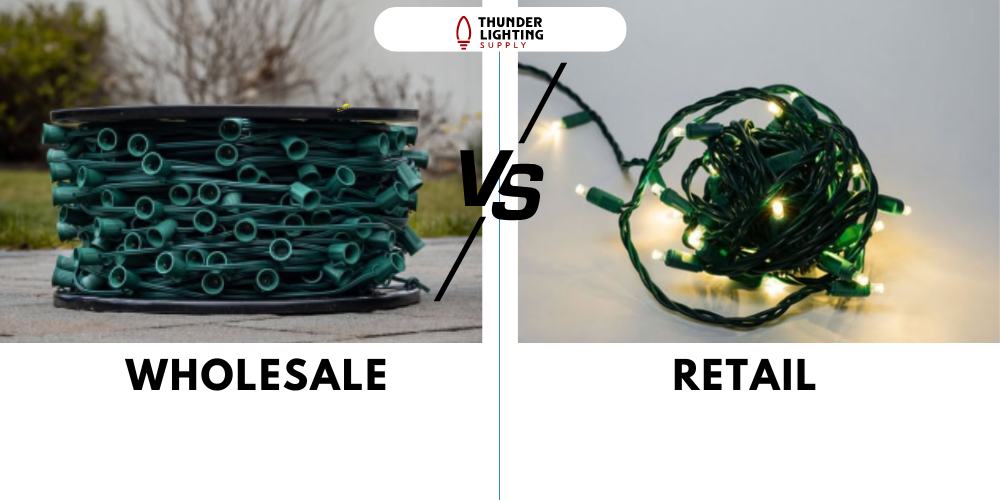
If you’re still buying fixtures at retail, you’re leaving real money on the table — job after job.
On a 50-fixture install, the difference between retail and wholesale pricing can top $3,000. That’s before you’ve touched a single wire. This guide breaks down exactly where that gap comes from, what wholesale actually gets you beyond just a lower price, and how to set yourself up to keep more of what you earn.
Retail fixture pricing typically runs 35–55% above wholesale trade cost. That markup isn’t about quality — it pays for storefronts, consumer return policies, and retail marketing budgets you’ll never benefit from.
Here’s what that looks like on actual jobs:
| Scenario | Retail Cost | Wholesale Cost | You Save |
|---|---|---|---|
| 20× commercial downlights | $1,800 | $1,080 | $720 |
| 50× pendant fixtures | $6,250 | $3,750 | $2,500 |
| 100-unit hospitality fit-out | $14,000 | $8,400 | $5,600 |
Estimates based on a conservative 40% retail markup. Actual savings will vary depending on fixture type, brand, and supplier.
And those are the conservative numbers. Decorative pendants, permanent lighting systems, and exterior commercial fixtures regularly carry retail markups of 60–80% — meaning the real gap on those product categories is even wider.
Every job you buy retail, you’re paying that premium for nothing.
Three Ways Retail Pricing Destroys Installer Profitability
1. You absorb costs built for consumers, not contractors.
Retail prices fund return policies that allow 30-day no-questions-asked returns, consumer support teams, and in-store inventory displays. As an installer placing bulk, project-driven orders, you fund all of that and receive none of it.
Wholesale trade accounts are structured for volume, speed, and reliability — not consumer convenience. The cost structure reflects that.
2. Your quotes become uncompetitive.
When an installer quotes a project using retail-sourced fixture costs, two things happen: their bid price rises or their margin collapses. Neither outcome is acceptable in a market where general contractors compare three bids before awarding a job.
Installers buying at trade pricing can quote more aggressively — and still protect a 25–35% product margin — while retail buyers have to choose between winning the job and making money on it.
3. Cash flow suffers without trade account terms.
Most retail transactions are prepayment or credit card only. Wholesale trade accounts with established suppliers typically offer better payment flexibility. For an installer running three or four concurrent projects, that difference can mean the gap between a cash flow problem and none at all.
What Trade Pricing Actually Includes
Wholesale pricing for pro installers is not simply a discounted version of the retail price. It is a different commercial relationship with a different service stack. What trade accounts include that retail never does:
Dedicated project support. A trade rep who knows your spec requirements, can pull product equivalents when your specified fixture is backordered, and can escalate priority orders before they stall a project.
Contractor-grade lead times. Trade distributors hold buffer inventory for known contractor customers. A retail order and a trade order for the same SKU in a supply crunch do not move through the same queue.
Substitution and specification flexibility. If a fixture on your spec sheet is discontinued mid-project, a trade partner finds the closest approved equivalent. A retail platform cancels the order.
Volume pricing tiers and professional-grade product access. Most trade accounts include tiered discounts — the more you purchase across the year, the lower your baseline cost per unit. They also unlock contractor-specific product lines not available at retail. A good example is the OMNI Lighting Demo Kit available through Thunder Lighting Supply — a professional presentation tool designed for installers to show clients permanent lighting options on-site during a walkthrough, something no retail channel stocks or supports.
Returns and defect handling. Trade accounts carry commercial-grade return terms. Defective units from a retail order go back through a consumer process with consumer timelines. Trade defect claims are resolved with replacement units, not refund credit.
How Pro Installers Structure Their Purchasing to Maximize Trade Pricing
Installers who consistently protect their product margins do a few things differently from those who don’t.
They consolidate suppliers. Rather than buying fixtures from four different sources across a project, they concentrate purchasing through one or two trade accounts. This drives volume, which drives tier pricing, which compounds over time. Thunder Lighting Supply supports landscape lighting, permanent lighting, and holiday lighting products under one account — meaning consolidation doesn’t require sacrificing product range.
They pre-purchase on confirmed projects. As soon as a job is awarded and the fixture specification is locked, they issue the purchase order. This captures current trade pricing before any price increases hit, and secures lead time.
They separate trade purchasing from emergency runs. Local hardware stores and retail chains are for last-minute supplementary items — wire, junction boxes, miscellaneous hardware. Fixture purchasing through those channels is a margin mistake, not a necessity.
They track purchasing against tier thresholds. Most trade accounts publish the purchase volume required to move to the next pricing tier. Thunder Lighting Supply’s Rewards Program is built exactly around this principle — once you hit $30,000 in qualifying purchases, you become eligible for rebates, and every additional dollar increases your rebate percentage. Experienced installers know where they are against that threshold and time larger orders to accelerate their path to higher tiers.
The Retail Premium Is a Tax on Installers Without a Trade Account
There is no competitive advantage to retail pricing for a professional installer. The higher unit cost, less favorable payment terms, consumer-grade support, and longer defect resolution timelines all represent costs that erode margin without adding any value to the installation business.
Wholesale trade pricing is not a perk for large contractors. It is the baseline commercial structure that any licensed professional installer can access — and the structural reason why experienced installers almost universally stop buying retail within the first two years of business.
The math is simple: on $100,000 in annual fixture purchases, a 35% retail markup versus trade pricing represents $26,000 in unnecessary cost. That is not a rounding error. That is the profitability of an entire project category.
Thunder Lighting Supply was built specifically for this — wholesale pricing with no minimum order requirement, so you can buy per job rather than in bulk, with a rewards program that builds long-term margin on top of your trade pricing. Open a trade account here or call (631) 803-9627 to get started.
FAQs
My clients are finding the same fixtures online for cheaper. How do I handle that?
Wholesale pricing isn’t publicly listed like retail SKUs — so it’s not the same product at a different price, it’s a different buying channel entirely. And if they want to supply their own fixtures from Amazon or a big-box store? Charge more for that install, not less. The warranty headache just became theirs.
Is it worth opening a trade account if I’m only doing a few jobs a month?
Yes. There’s no minimum order with Thunder Lighting Supply — you buy per job, not in bulk. Whether you’re a small lighting contractor just getting started or an established installer scaling up, the margin difference adds up from your very first order.
Should I show clients where I buy my fixtures?
Most contractors don’t — and for good reason. Your supplier relationship, your pricing, and your product access are part of what you bring to the job. A client going direct to a retail channel and buying the same fixture will pay more and get consumer-grade support. That’s not your problem to solve for them. Your value is the install, the spec knowledge, and the warranty coverage you provide.
