

Commercial Christmas Display Lighting Checklist: Downloadable Guide for Installers & Businesses


Large-scale holiday lighting projects bring magic to public spaces, retail centers, and corporate venues—but behind every stunning display is a plan built on precision, safety, and consistency.
For professional installers and businesses, success isn’t just about creativity — it’s about organization, planning, and execution. This guide walks you through each stage of a commercial Christmas lighting project, from early design to end-of-season teardown. You’ll also find a free downloadable commercial holiday lighting checklist at the end.
Step 1: Start With a Clear Plan
Every professional display begins with clarity. Before purchasing a single strand of lights, define your project’s purpose and scope:
- Are you attracting customers to a retail location?
- Highlighting a brand through thematic lighting?
- Creating a community centerpiece for public enjoyment?
Conduct an on-site walkthrough early — during the evening if possible. Take reference photos, identify key focal points (rooflines, signage, trees, entryways), and outline zones. Knowing these details upfront makes it easier to estimate materials, wire runs, and power sources.
Create a timeline that includes design approval, ordering lead times, installation windows, and testing days. Include buffers for bad weather or delivery delays. The clearer your plan, the smoother your execution.
Pro Tip: Many U.S. municipalities require permits for large public installations. Verify local codes and scheduling constraints before committing to install dates.
Step 2: Design for Impact and Safety
Once you know your layout, move into design. Commercial lighting projects demand balance between visual impact and structural practicality. Choose elements that enhance your environment rather than overpower it—uniform color temperatures, cohesive themes, and symmetry across zones.
Safety should guide every design decision. Determine:
- Mounting methods (clips, anchors, or scaffolds)
- Equipment needs (boom lifts, harnesses, extension poles)
- Cable management strategies to avoid trip hazards or wind drag
Document everything before installation begins. Detailed plans save time and prevent on-site rework.
If you’re managing multiple zones, create a visual map showing light types and power sources for each. This also makes it easier to coordinate with electricians and maintenance crews later.
U.S. Standard Reminder: Follow OSHA guidelines for fall protection when working at height, and use only UL-listed outdoor lighting products.
Step 3: Choose Commercial-Grade Materials
The difference between residential and commercial displays is durability. Always choose commercial-grade materials engineered for long-term performance.
Key Material Features:
- LED Technology: Energy-efficient and long-lasting (up to 75% less energy than incandescent).
- Weather-Sealed & UV-Resistant: Ideal for outdoor environments.
- Consistent Color Temperature: Prevents uneven or patchy visuals.
- Heavy-Duty Wiring: SPT-1 or SPT-2 wire with water-sealed sockets.
- GFCI Protection: Prevents electrical hazards in wet environments.
Mixing different brands or color temperatures can result in uneven brightness. Buy commercial lights with one trusted supplier — like Thunder Lighting Supply — to ensure uniformity and simplify reorders.
Check out our Commercial Christmas Lighting Supplies for Professional Installers
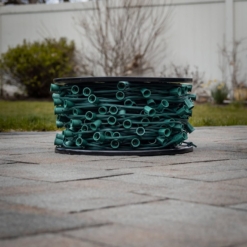

C9 Spool 12″ Spacing Green
SKU:
19401-P
Price range: $19.99 through $799.98
Select options
This product has multiple variants. The options may be chosen on the product page

Call for Availability
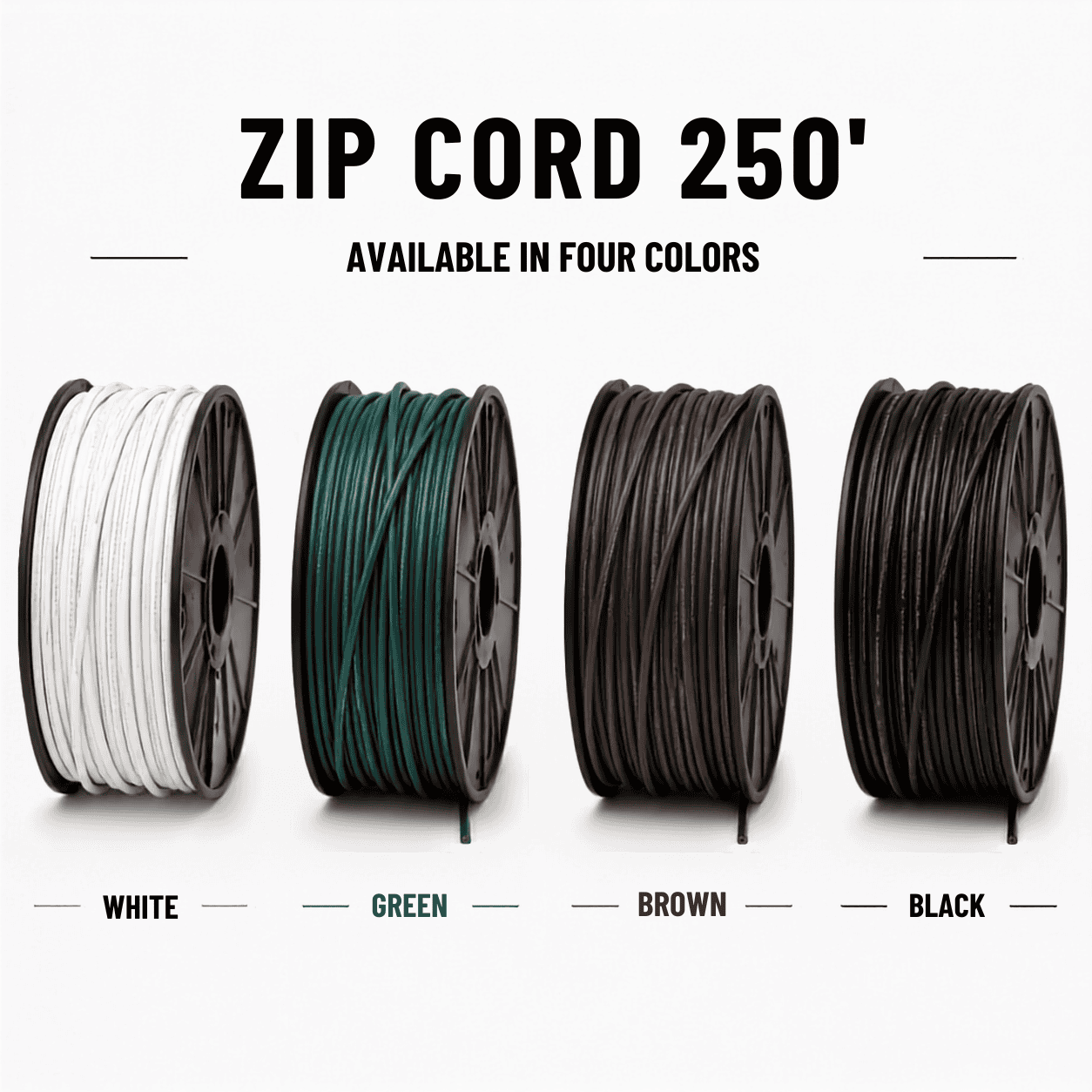

Zip Cord 250′ SPT-1
SKU:
11002
Price range: $84.99 through $89.99
Select options
This product has multiple variants. The options may be chosen on the product page
Step 4: Power Planning and Circuit Management
An impressive light show can quickly become a liability without proper electrical planning.
Follow the 80% rule — never exceed 80% of a circuit’s rated capacity. Calculate your total load per zone (Watts ÷ Volts = Amps) and distribute power accordingly.
Power Planning Tips:
- Label every circuit, outlet, and extension cord.
- Create a printed power map linking each zone to its breaker or outlet.
- Use GFCI outlets for all outdoor circuits.
- Check for voltage drop on long cable runs.
- Keep a surge protector on the main line for sensitive LED controllers.
Safety First: Never daisy-chain multiple power strips. Overloaded lines are one of the top causes of outages in U.S. commercial lighting setups.
Step 5: Coordinate Installation Logistics
Commercial projects involve many moving parts — electricians, installers, property managers, and sometimes local city officials. Coordination is just as critical as the lights themselves.
Best Practices for Smooth Operations:
- Draft a detailed installation schedule covering each zone.
- Pre-test every strand on the ground before mounting.
- Ensure PPE compliance for all personnel on-site.
- Keep backup lights, connectors, and clips ready.
- Schedule installations during off-hours to minimize disruptions.
- Confirm lift or scaffold rentals well in advance of peak season.
Pro Insight: U.S. shopping centers often require night installations to comply with safety and crowd-control policies — plan your crew shifts accordingly.
Step 6: Maintenance and Teardown
Your work doesn’t end when the lights turn on. Maintenance and teardown ensure safety, consistency, and equipment longevity.
During the Season:
- Schedule weekly inspections to check for outages or storm damage.
- Log each repair and replacement for accountability.
Post-Season Teardown:
- Power down zones in sequence.
- Remove and label strands by zone or building section.
- Coil and store lights in waterproof containers.
- Document materials needing repair or replacement.
A disciplined teardown reduces next year’s setup time by up to 25% and extends equipment life.
Check out our downloadable version of this checklist to stay organized during every step of your installation — available from Thunder Lighting Supply.
Conclusion
A professional holiday display reflects the quality of your brand or service—and preparation makes all the difference. With a clear plan, durable materials, and structured maintenance, you’ll deliver displays that impress clients and last all season long.
If you’re sourcing commercial-grade Christmas lights, explore Thunder Lighting Supply for dependable products, expert guidance, and wholesale pricing for professionals.
