

Patio Outdoor Lighting Ideas for Installers

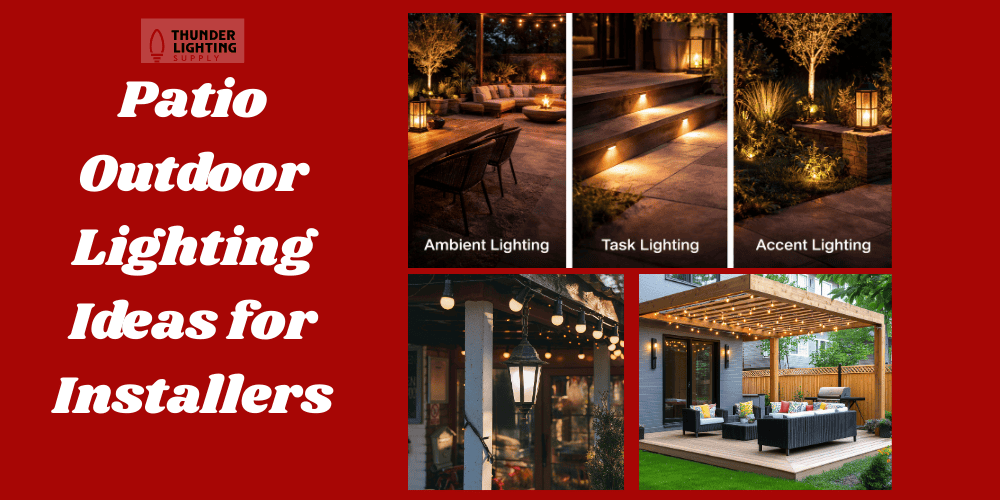
Picture a client stepping out onto their patio at dusk. The space is softly lit, warm, and inviting—lights overhead create a gentle glow while pathways and edges are clearly defined. It doesn’t just look good. It feels right.
This is what clients are really buying.
For lighting installers, patio lighting is no longer just about fixtures—it’s about creating outdoor environments people want to spend time in. And the installers who understand this are the ones winning more projects and higher-value jobs.
Why Patio Lighting Is a High-Value Opportunity for Installers
Outdoor living continues to grow, and patios have become extensions of the home. With that shift, lighting plays a bigger role in how these spaces are used after sunset.
A well-designed lighting system doesn’t just improve visibility. It creates atmosphere, increases safety, and extends how long a space can be enjoyed throughout the evening.
From an installer’s perspective, this opens the door to more than just basic installs. It allows you to offer complete lighting solutions—the same approach used by top competitors in the market.
Layered Patio Lighting Design
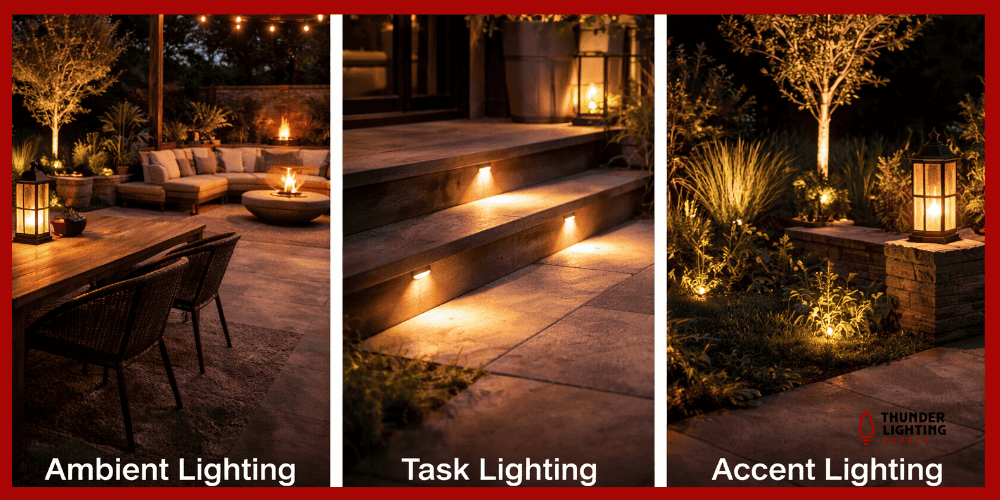
One of the most consistent strategies across high-ranking competitors is layered lighting. Instead of relying on a single source, effective patio lighting combines multiple elements that work together.
Ambient lighting sets the overall mood. Task lighting improves usability and safety. Accent lighting highlights features and adds depth.
For installers, this approach naturally increases project scope while delivering a more complete and professional result.
Bistro Lighting for Modern Patio Design
Among all lighting options, bistro lighting (string lighting) continues to dominate patio installations.
It’s not just because it looks good—it’s because clients immediately understand it. When they see it, they picture gatherings, dinners, and relaxed evenings outdoors.
For installers, bistro lighting offers something equally important: repeatability. It’s fast to install, easy to expand, and works across residential and commercial spaces. Many installers now rely on complete systems—combining wire, accessories, and RGBW-capable bulbs—to simplify layout planning and ensure consistency across projects.
This is where having a reliable system matters.
Using a complete setup—such as bistro wire, compatible accessories, and RGBW-capable bulbs—ensures that installations not only look clean but also perform consistently over time.
For installers working with scalable patio lighting systems, commonly used components include:
Recommended Bistro Lighting Components for Installers
For installers working with scalable patio lighting systems, commonly used components include:


These components are often combined with compatible bistro wire and accessories to create flexible, expandable lighting layouts across residential and commercial projects.
Rise of RGBW Patio Lighting
Traditional patio lighting has always centered around warm white tones. While that still plays an important role, clients are increasingly looking for more flexibility.
They want lighting that adapts.
This is where RGBW systems change the conversation.
Instead of offering a single lighting style, installers can deliver:
- Warm white for everyday use
- Color scenes for holidays and events
- Customizable ambiance controlled by the client
Products like OMNI RGBW 12V bistro bulbs fit directly into this shift. Whether used in a full 12-set layout for larger patios or a smaller 6-set configuration for residential spaces, they allow installers to offer something competitors often don’t: adaptability.
Layout Ideas for Residential and Commercial Patios
One thing top-performing competitors do well is simplify design decisions for clients. Instead of overwhelming them with options, they present clear, proven layouts.
Overhead canopy designs are one of the most requested setups. Lights are stretched evenly across the patio, creating a defined ceiling of light that instantly transforms the space.
For larger patios, lighting can also be used to define zones. A dining area might feature tighter, brighter coverage, while lounge areas use softer, more relaxed spacing.
These design choices don’t just improve aesthetics—they make it easier for clients to visualize the end result, which leads to faster approvals.
Lighting for Safety and Visibility
While ambiance is the selling point, function remains essential.
Pathways, steps, and transitions between spaces should always be clearly illuminated. This is where additional lighting layers—such as path lights or step lighting—support the overall design.
Installers who balance atmosphere with usability are the ones who create spaces that clients truly enjoy using, not just looking at.
How to Achieve a Professional Finish
Even when using similar products, the final result often comes down to execution.
Clean wire runs, proper spacing, and consistent tension across bistro lines create a polished, professional look. Small details—like how wires are anchored or how evenly bulbs are spaced—can significantly impact how the project is perceived.
Using dedicated components, such as proper bistro wire and accessories, helps maintain both durability and visual consistency over time.
Turning Patio Lighting Into a Repeatable System
The most successful installers don’t approach each project from scratch. They develop repeatable systems that can be adapted to different spaces.
A smaller patio might start with a basic layout and expand later. A larger project might incorporate multiple runs, color control, and additional lighting layers from the beginning.
This approach not only improves efficiency but also increases long-term revenue through upgrades, expansions, and maintenance.
Conclusion
Patio lighting is no longer just an add-on—it’s a central feature of outdoor living. And for lighting installers, it represents one of the most scalable and profitable categories in the industry.
By focusing on layered design, bistro lighting systems, and RGBW flexibility, you can deliver outdoor spaces that feel intentional, functional, and visually compelling.
More importantly, you position yourself the same way top competitors do—not as someone installing lights, but as someone creating outdoor experiences.
