

What is the Rule of thumb for outdoor lighting

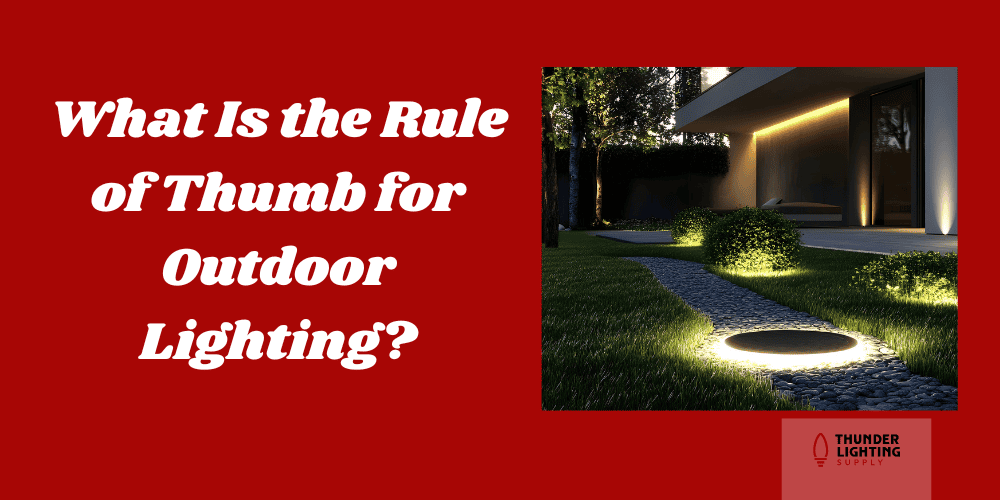
Outdoor lighting installations don’t always require complex lighting calculations or design software. In many residential and small commercial projects, experienced installers rely on proven rules of thumb to create balanced, professional outdoor lighting systems.
These practical guidelines allow contractors to design lighting layouts quickly while still achieving visually appealing results. Whether you’re installing pathway lighting, illuminating trees, or highlighting architectural features, a few simple principles can make a significant difference in the final outcome.
This guide covers some of the most common outdoor lighting rules used by professional installers to plan effective and attractive lighting installations.
Why Installers Use Outdoor Lighting Rules of Thumb
Most landscape lighting installations happen during site visits where installers need to make quick decisions about fixture placement, brightness, and coverage.
Instead of running detailed photometric calculations, professionals often rely on field-tested guidelines that help produce consistent results.
Using outdoor lighting rules of thumb helps installers:
- Design lighting layouts faster
- Avoid uneven illumination or dark spots
- Reduce fixture adjustments after installation
- Deliver professional-looking outdoor environments
These guidelines are not rigid formulas, but they provide reliable starting points for most projects.
The Core Rule of Thumb for Outdoor Lighting
Before diving into specific spacing and lumen guidelines, most professional installers follow one foundational principle:
Outdoor lighting should emphasize contrast, not brightness.
In other words, effective outdoor lighting highlights key features while leaving surrounding areas slightly darker. This contrast creates depth, visual interest, and a more natural nighttime environment.
A good rule of thumb is to illuminate paths, focal points, and architectural elements, rather than trying to evenly light the entire yard.
When done correctly, outdoor lighting should guide the eye through the landscape and enhance important features without overwhelming the space with excessive brightness.
Rule #1: Space Path Lights 6–8 Feet Apart
Path lighting is one of the most common elements in landscape lighting design. Proper spacing is essential to ensure pathways are safely illuminated without creating an overly bright or cluttered look.
A commonly used guideline is to place path lights approximately 6–8 feet apart.
Typical spacing recommendations include:
6–8 feet for standard walkways
4–6 feet for narrow or curved paths
8–10 feet when using brighter fixtures
Installer Tip: Rather than placing lights directly opposite each other on both sides of a path, it is often better to stagger fixtures along the walkway. This creates a softer lighting pattern and avoids the “airport runway” effect.
Rule #2: Use the 1:3 Rule for Tree Uplighting
Uplighting trees is one of the most effective ways to add depth and visual interest to a landscape at night. A common guideline used by installers is the 1:3 placement rule.
Distance from the tree ≈ one-third of the tree’s height
For example: A 15-foot tree would typically have a light placed about 5 feet from the trunk.
This distance helps produce a balanced beam spread while minimizing harsh shadows or bright hotspots.
Rule #3: Use the Right Lumen Output
Outdoor lighting is most effective when it highlights key features rather than flooding the entire space with bright light.
Typical lumen ranges used in landscape lighting include:
| Application | Typical Lumens |
| Path lights | 100–200 lumens |
| Garden accent lights | 50–150 lumens |
| Tree uplighting | 200–300 lumens |
| Security lighting | 700+ lumens |
The goal is to create contrast and depth so that important elements of the landscape stand out after dark.
Need Outdoor Lighting Supplies for Your Next Project?
Thunder Lighting Supply provides contractor-grade outdoor lighting products for professional installations.
- Landscape lighting fixtures
- Low-voltage transformers
- LED outdoor lighting systems
- Contractor pricing
Rule #4: Layer Outdoor Lighting
Professional outdoor lighting installations usually combine three types of lighting to create a balanced nighttime environment.
Ambient Lighting
Ambient lighting provides general illumination for navigation and safety.
Examples include:
- pathway lights
- step lights
- post lights
Accent Lighting
Accent lighting highlights landscape features and architectural details.
Examples include:
- tree uplighting
- statue lighting
- wall grazing lights
Task or Security Lighting
Task lighting improves visibility around entryways and functional areas.
Examples include:
- driveway lighting
- entry lighting
- motion floodlights
Using these three layers together creates a more natural and visually appealing outdoor lighting design.
Rule #5: Use Warm Color Temperatures
Color temperature has a significant impact on the overall appearance of outdoor lighting.
For most residential landscape lighting installations, installers typically use warm white lighting in the 2700K–3000K range.
Typical guidelines include:
- 2700K for residential landscapes
- 3000K for modern architectural lighting
- 4000K or higher for security lighting
Warm lighting tends to blend better with plants, wood, and stone surfaces.
Rule #6: Keep Transformers at 80% Capacity
Low-voltage lighting systems rely on transformers to supply power to the fixtures. To maintain system reliability, installers typically avoid loading transformers to their maximum capacity.
A common rule is to operate transformers at no more than 80% of their rated wattage.
Example:
- 300-watt transformer
- Recommended load: 240 watts
This leaves room for voltage drop and future fixture additions.
Rule #7: Hide the Fixture — Show the Effect
One of the simplest principles in landscape lighting design is that the lighting effect should be visible, not the fixture itself.
Professional installers often hide fixtures behind:
- plants
- rocks
- landscape features
This approach produces a cleaner appearance and allows the light to highlight the landscape naturally.
Conclusion
Outdoor lighting doesn’t need to be complicated. By following a few proven rules of thumb—such as proper path spacing, balanced lumen output, layered lighting, and careful fixture placement—installers can create attractive and effective outdoor lighting systems with confidence.
These simple guidelines help ensure that outdoor spaces remain safe, functional, and visually appealing after dark, while also making the installation process faster and more efficient.
For contractors and installers, mastering these lighting principles is one of the best ways to consistently deliver professional outdoor lighting results.
